
Top AI Skills You Need to Learn in 2026 to Stay Ahead
Artificial intelligence is no longer just a buzzword—it's becoming an essential part of how businesses operate, how people work, and how technology evolves.
From healthcare and finance to marketing and education, AI is transforming industries around the world. As a result, employers are looking for professionals who understand how to use AI effectively, regardless of their job title.
The good news is that you don't need to be a data scientist to benefit from AI. Whether you're a student, designer, marketer, developer, or entrepreneur, learning AI-related skills can make you more competitive in today's job market.
In this guide, we'll explore the most valuable AI skills to learn in 2026 and explain why they matter.
Why AI Skills Matter More Than Ever
Businesses are adopting AI to improve productivity, automate repetitive tasks, and make better decisions using data.
Professionals who understand AI can:
- Complete tasks more efficiently
- Improve business processes
- Solve complex problems
- Increase productivity
- Stay competitive in a rapidly changing job market
Learning AI isn't about replacing human creativity—it's about enhancing it.
1. AI Prompt Engineering
One of the fastest-growing skills today is prompt engineering.
Prompt engineering is the ability to communicate effectively with AI tools to generate useful, accurate, and creative results.
Strong prompt engineers know how to:
- Ask clear questions
- Provide context
- Refine AI responses
- Generate better content
- Solve business problems with AI
This skill is valuable across marketing, programming, design, education, and customer support.
2. Data Literacy
AI systems rely on data.
Understanding how data is collected, organized, and interpreted helps professionals make better decisions.
Important concepts include:
- Reading reports
- Understanding trends
- Basic statistics
- Data visualization
- Data-driven decision making
You don't need to become a data analyst, but understanding data will improve your AI skills significantly.
3. Automation
AI makes automation easier than ever.
Learning how to automate repetitive tasks can save businesses hundreds of hours every year.
Examples include:
- Email automation
- Content generation
- Customer support
- Workflow automation
- Report creation
- Social media scheduling
Automation is becoming a valuable skill in nearly every profession.
4. AI Content Creation
AI tools can assist with:
- Blog writing
- Social media posts
- Marketing copy
- Product descriptions
- Video scripts
- Email campaigns
However, successful professionals understand that AI should support creativity—not replace it.
Human editing, expertise, and originality remain essential.
5. AI for Programming
Developers increasingly use AI assistants to:
- Generate code
- Explain programming concepts
- Debug applications
- Write documentation
- Improve code quality
AI speeds up development, but developers still need strong programming fundamentals to evaluate and improve AI-generated code.
6. AI for Design
Designers use AI to:
- Generate concepts
- Create illustrations
- Remove backgrounds
- Edit images
- Build mood boards
- Explore multiple design variations
AI helps designers work faster while giving them more time to focus on creativity and user experience.
7. Critical Thinking
One of the most overlooked AI skills is the ability to evaluate AI-generated information.
AI can make mistakes.
Professionals must know how to:
- Verify facts
- Identify bias
- Check sources
- Evaluate quality
- Make informed decisions
Critical thinking ensures AI becomes a reliable assistant rather than a source of misinformation.
Best AI Tools to Explore
There are many AI tools available, but beginners should focus on understanding how they work rather than trying to master everything at once.
Popular categories include:
Writing Assistants
Used for content creation, editing, and brainstorming.
Image Generation Tools
Help create illustrations, marketing visuals, and creative concepts.
Coding Assistants
Support developers by generating code, explaining errors, and improving productivity.
Productivity Tools
Assist with scheduling, meeting summaries, note-taking, and workflow management.
As new tools appear, the underlying skills—problem-solving, communication, and critical thinking—remain valuable.
Who Should Learn AI?
AI isn't just for programmers.
It's valuable for:
- Students
- Business owners
- Digital marketers
- Graphic designers
- SEO specialists
- Developers
- Content creators
- Project managers
- Entrepreneurs
Regardless of your profession, AI can help you work smarter and more efficiently.
How to Start Learning AI
If you're new to AI, follow this simple roadmap:
Learn the Basics
Understand what AI is and where it's used.
Explore Popular Tools
Practice using AI for writing, research, design, and productivity.
Build Real Projects
Apply AI to real-world tasks, such as creating content, automating workflows, or solving business challenges.
Stay Updated
AI evolves quickly, so continue learning through courses, industry news, and hands-on practice.
Learn AI at BunnyChain Academy
At BunnyChain Academy, we believe AI education should be practical, accessible, and career-focused.
Our courses help students understand not only how AI works but also how to apply it in real-world situations across business, marketing, design, and technology.
Through hands-on projects and expert guidance, you'll gain the confidence to use AI responsibly and effectively.
Conclusion
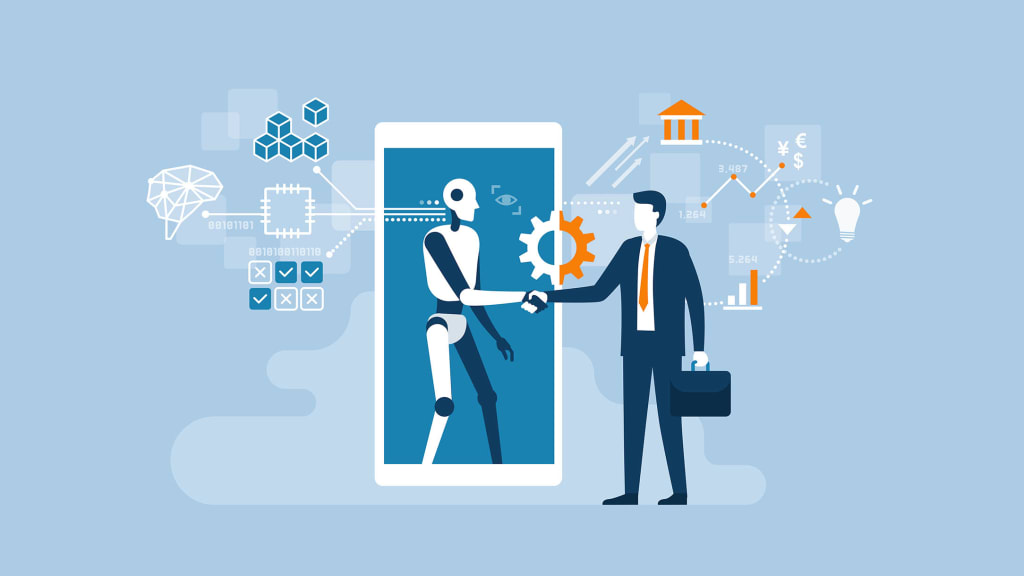
Artificial intelligence is shaping the future of work, but success isn't about competing with AI—it's about learning how to work alongside it.
By developing practical AI skills, strengthening your critical thinking, and continuously improving your knowledge, you'll be well prepared for the opportunities of tomorrow.
The future belongs to professionals who are willing to learn, adapt, and embrace innovation.
Ready to Build Future-Proof Skills?
Join BunnyChain Academy and discover how AI, digital marketing, design, and programming come together to prepare you for the careers of tomorrow. Learn through real-world projects, expert mentorship, and practical experience that helps you stand out in a rapidly changing digital world.